
What endures
This reflection marks 15 years since I decided to start a nonprofit to support Mongabay.

I am often asked what Mongabay’s legacy is, or what it might turn out to be. The question usually comes with an assumption that a quarter-century of publishing should yield a tidy answer. It does not. Mongabay did not begin with a theory of media change, nor with an ambition to redefine environmental journalism. It began with a website, a fascination with tropical forests, and a sense that large parts of the world’s environmental story were being poorly covered or not covered at all.

Environmental journalism long predates Mongabay. It has roots in natural history writing, investigative reporting, and advocacy journalism, each with its own traditions and strengths. Mongabay did not invent the field. What it did do, gradually and sometimes unintentionally, was to occupy a space that many larger outlets were leaving behind: sustained, detailed reporting on ecosystems and communities far from centers of power, produced with the assumption that these places mattered in their own right.
For much of its existence, Mongabay has focused on what happens at the margins of global attention. Tropical forests, coral reefs, small island fisheries, Indigenous territories, and remote mining frontiers rarely compete well with elections, wars, or financial crises. Yet these places often sit at the center of planetary risk. Covering them well requires time, local knowledge, and a tolerance for stories that do not resolve neatly.

One element of Mongabay’s legacy lies in persistence. Many news organizations cover environmental issues episodically, often when a crisis peaks. Mongabay stayed. It returned to the same regions and topics year after year, building institutional memory and relationships that made deeper reporting possible. Over time, this continuity allowed patterns to emerge: how deforestation shifts from one district to another, how enforcement waxes and wanes, how communities adapt when promised development fails to arrive.
Another part of the legacy is structural rather than editorial. Mongabay grew during a period when foreign bureaus were closing and specialist beats were shrinking. It did so by relying on a distributed network of local journalists rather than a centralized newsroom sending correspondents abroad. This approach was not novel in theory, but it was uncommon in practice at scale, especially for environmental reporting. Local reporters brought language skills, context, and credibility that parachute journalism often lacks. At times, that reporting took place in contexts where powerful interests are hostile to scrutiny.
That model shaped the journalism itself. Stories were more likely to reflect local priorities and tensions, rather than being framed primarily for Western audiences. Indigenous land rights, small-scale fisheries, and community forest management were not treated as side issues or human-interest angles, but as core elements of environmental governance. Over time, this emphasis helped normalize the idea that environmental outcomes are inseparable from social and political ones.

That same emphasis also shaped whose lives were treated as consequential. Mongabay routinely centered Indigenous leaders, local conservationists, field scientists, and environmental defenders as primary actors rather than peripheral voices. This extended even to obituaries and profiles, which treated lives spent protecting ecosystems as part of the historical record. In a small way, it widened the definition of who belongs in environmental history.
Alongside these shifts in framing and recognition, Mongabay’s investigations have, at times, produced clear and traceable consequences: revoked permits, corporate sanctions, regulatory changes. These outcomes matter, but they are not the whole story, and they are not guaranteed. Journalism rarely operates as a direct lever. More often, it supplies evidence, context, and visibility that others use. One of Mongabay’s more subtle contributions has been to make certain forms of harm explicit through its work. Satellite imagery, shipping data, and court records are now common tools in environmental reporting, but they were not always so. By consistently pairing data with field reporting, Mongabay helped demonstrate how technical evidence could be translated into narratives that non-specialists could understand and act upon.
Equally important is what Mongabay chose not to optimize for. It did not chase traffic at all costs, nor did it rely heavily on outrage or spectacle. Stories were made freely available for republication, on the assumption that reach and reuse mattered more than ownership. This decision reduced revenue options but increased circulation among policymakers, researchers, and other journalists. In practice, many of Mongabay’s stories spread farther through syndication than they ever would have through direct readership alone.

The organization’s shift to a nonprofit model reinforced this orientation. Freed from the need to maximize advertising impressions, Mongabay could afford to think in terms of influence rather than volume. In some cases, a single reader with decision-making authority could matter more than thousands of casual clicks. That logic does not lend itself to easy metrics, and it resists simple claims about impact. But over time, it shaped editorial choices, distribution strategies, and investments in languages and regions that commercial media often overlook.
If there is a philosophical throughline to Mongabay’s work, it is a belief that information gaps matter. Environmental degradation often accelerates in places where scrutiny is weak and documentation is scarce. By filling those gaps, journalism can change the balance of knowledge, even if it cannot dictate outcomes. In this sense, Mongabay’s role has often been intermediary rather than catalytic: connecting scientists to communities, local reporting to global audiences, and on-the-ground realities to abstract policy debates.
The organization’s growing attention to solutions journalism fits within this frame. Reporting on what works has not meant abandoning critical scrutiny or minimizing failure. It has meant acknowledging that despair is a poor organizing principle. Carefully reported examples of recovery, reform, or resilience can provide useful information without lapsing into advocacy. They can also counter the fatigue produced by constant crisis coverage, especially among audiences who already accept the scale of environmental problems.
Mongabay’s legacy is therefore uneven and unfinished. It is visible in the careers of journalists who cut their teeth reporting locally and went on to shape coverage elsewhere. It appears in datasets that outlast individual stories, in partnerships that extend reporting beyond a single outlet, and in court records and policy documents that cite journalism as one input among many. It is harder to see in any single moment.
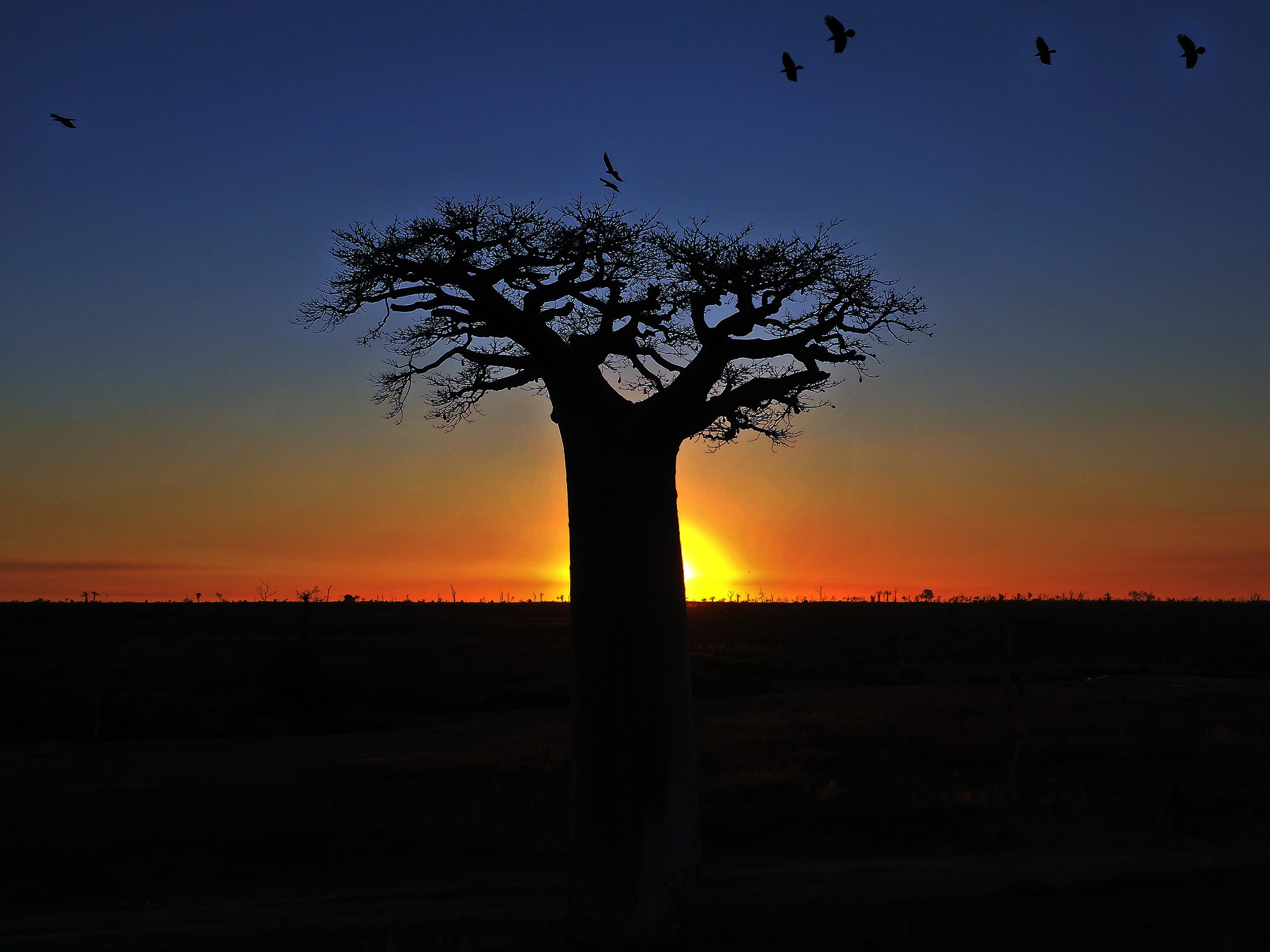
Perhaps the most accurate way to describe Mongabay’s significance is modest. It did not transform environmental journalism on its own. It did not solve the information crisis around climate or biodiversity. What it did do was demonstrate that sustained, globally distributed, science-based reporting was possible at a time when many assumed it was not. It showed that environmental journalism could be both rigorous and accessible, both local and international, without being narrowly activist or theatrically neutral.
Legacies are often clearer in retrospect than in real time. For now, Mongabay’s work continues, shaped by the same constraints and uncertainties that define the broader media landscape. If there is a lesson in its history, it is not about scale or prominence, but about patience. Attention, when applied consistently and carefully, can still change how the world sees places it once ignored. That may not be a grand achievement, but it is a useful one.
Other pieces:
How AI is Distorting Wildlife Conservation
Anyone who looks at a LinkedIn feed with any regularity is likely familiar with the deluge of fabricated images and videos now circulating online. Some are harmless curiosities (other than the resource use). Others are more troubling. Among the most consequential are AI-generated depictions of wildlife, which are beginning to distort how people understand animals, their behavior, and the risks they pose.
Cobras may be riding trains in India
On India’s railways, stowaways are not limited to ticketless passengers. Some arrive without limbs, luggage, or much interest in timetables. A paper recently published in Biotropica suggests that king cobras may occasionally hitch rides on trains in western India, turning railways into unexpected dispersal routes.
Why some stories take years to report
For Isabel Esterman, journalism’s influence is often cumulative. It comes from staying with a subject long enough for the evidence to become harder to ignore. “It’s not one story,” she says. “It’s this collective body of reporting, and staying on it has been significant.” That idea runs through her work at Mongabay, where she has been on staff since 2016 and now serves as managing editor for Southeast Asia. Much of the industry moves quickly from one subject to the next. Esterman has tended to stay put. To ask what happens if a newsroom keeps reporting after the first headlines fade.
So many of the lessons shared here are relevant to my own work as a community cultivator especially as we transition toward more media focused efforts. Thanks for sharing this thoughtful reflection.
Very illuminating about what and how you are trying to do— the big picture into which the details fit (like the two photos, close and distant, of the Baobab (?) tree).