

The case for field stations
Conservation has more data than ever. Field stations help turn it into answers.

A field station is usually a working place. It may have bunkrooms, trails, a generator, stored specimens, weathered notebooks, drying boots, a small lab, and staff who know when the road floods, where to find a mobile network signal, or which hillside burned five years ago. Its value is easy to miss because it is often measured through other things: papers, students, monitoring plots, visiting researchers, restored forest, fewer snares, or a longer record of what changed.
A new BioScience paper argues that these stations deserve a larger role in conservation policy, especially in the tropics. The authors describe tropical field stations as institutions that can help turn global environmental commitments into local work. Governments have promised to protect more land and sea, restore degraded ecosystems, slow extinctions, and make conservation more equitable. These goals require information, trust, capacity, and persistence. Field stations can supply much of that infrastructure.
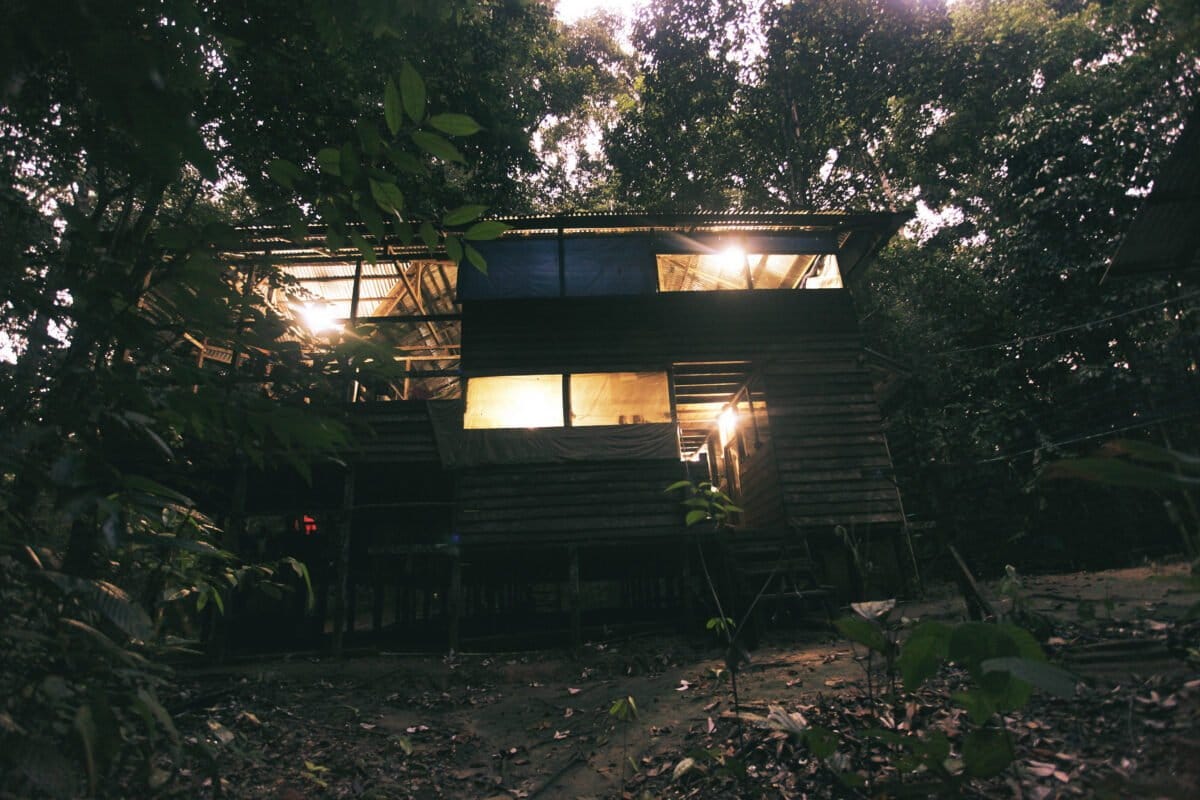
The argument is strongest in places where conservation decisions affect both biodiversity and livelihoods. A station in a forest, savanna, wetland, or coastal ecosystem is more than a base for visiting scientists. It can support long-term monitoring, train local researchers, employ people from nearby communities, and keep conservation connected to park staff, farmers, fishers, Indigenous groups, and officials.
More data, harder answers
That gap is important because conservation has become data-rich and answer-poor. Satellites can detect tree-cover loss within days. Acoustic sensors can record birds, frogs, insects, and mammals across a year. Camera traps, drones, and environmental DNA can collect measurements at scales that were implausible not long ago. These tools are changing conservation for the better. They also make field judgment more important, because more information creates more need for interpretation.
A forest may still look intact from above after hunting has reduced part of its animal community. A restored area may gain canopy cover before it recovers ecological function. A protected area may appear effective because it was already remote, steep, or politically hard to clear. These distinctions matter for conservation claims. They require baselines, comparison sites, local knowledge, and a credible estimate of what would have happened without an intervention. Field stations are well suited to that work because they keep people close to the systems being measured.
The value of a long record
Long-term presence also changes the quality of evidence. A short survey can describe a moment. A long record can show direction. Some ecological changes are slow enough to be missed by a grant cycle and fast enough to affect decisions within a lifetime. Climate shifts, fragmentation effects, species turnover, hunting pressure, fire regimes, and disease dynamics often become identifiable only through repeated observation. The Biological Dynamics of Forest Fragments Project in the Brazilian Amazon, started in 1979, is one example. Its value comes partly from the fact that the same forest fragments have been studied across decades as the surrounding landscape, scientific questions, and conservation priorities changed.
Field stations can also make conservation more testable. Restoration and agroforestry are now widely promoted, but practitioners still need to know which methods work, where, and under what conditions. Field stations in Ecuador, Costa Rica, and Brazil have supported experiments on restoration and applied nucleation. A 15-year study in Costa Rica, for example, compared applied nucleation with natural regeneration and tree plantations, producing evidence that is more useful than a general call to restore forest. The practical value lies in seeing how methods perform on real land, under real constraints.
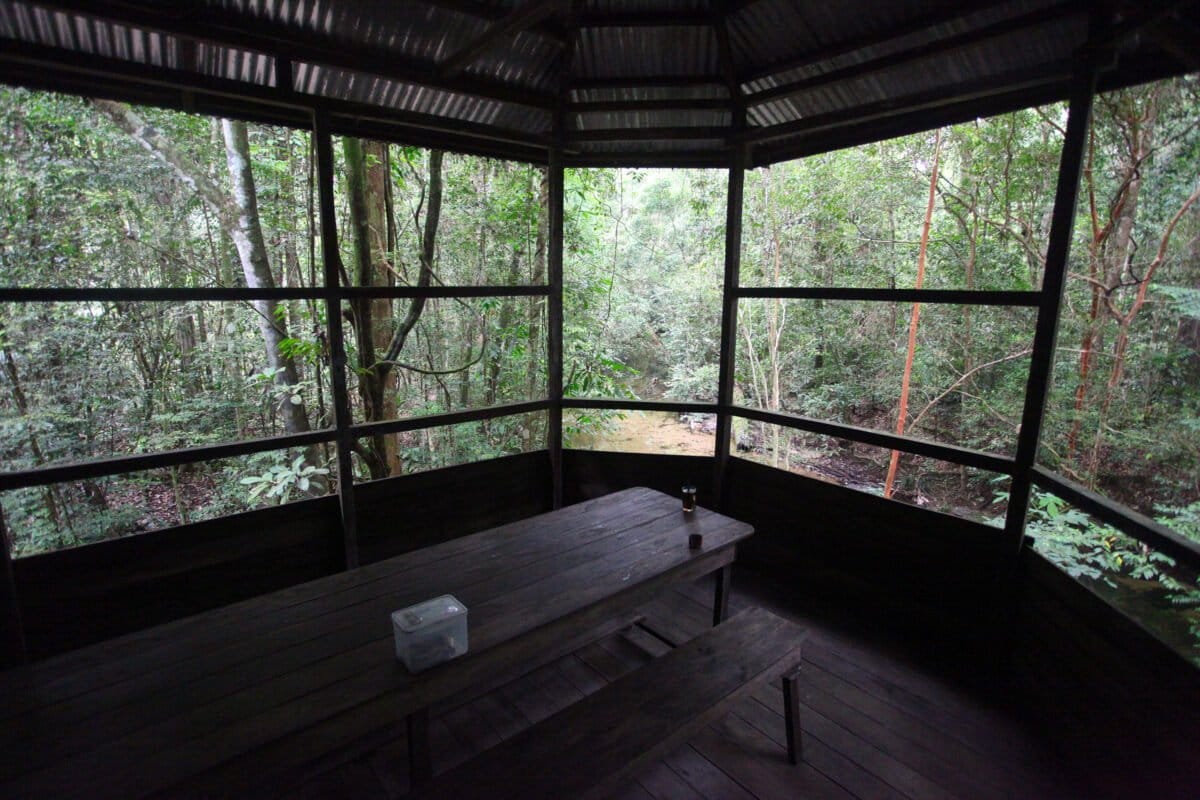
The case for stations is also economic. A 2024 Conservation Letters study examined tropical field stations that host primate research. The authors surveyed leaders of 157 stations in 56 countries. Respondents reported improved habitat quality at more than 80% of stations and reduced hunting rates at a similar share. Most stations hired people from nearby communities. Most collected long-term data, hosted researchers, supported students, and brought visitors into contact with working conservation landscapes. A spatial analysis also found lower deforestation near stations than in matched comparison areas.
These findings need careful handling. Some are based on perceptions reported by station leaders, and field stations differ widely in size, governance, funding, and local legitimacy. The pattern remains important. In many places, a station’s presence brings jobs, attention, patrol support, visiting researchers, and a regular stream of people who notice when something changes. These effects are hard to capture in a narrow cost-benefit analysis, which helps explain why stations are often undervalued.
The BioScience paper emphasizes another role: connection. Conservation policy is usually negotiated far from the places where it will be applied. Implementation happens where land, water, food, income, authority, and identity are involved. Field stations can connect those levels. They can bring international researchers into contact with local scientists, Indigenous communities, park staff, farmers, fishers, students, and officials. The result is not automatically equitable or useful. It depends on governance, data ownership, agenda-setting, employment, and credit. Still, stations can provide a place where conservation evidence is discussed with people who live with the consequences.
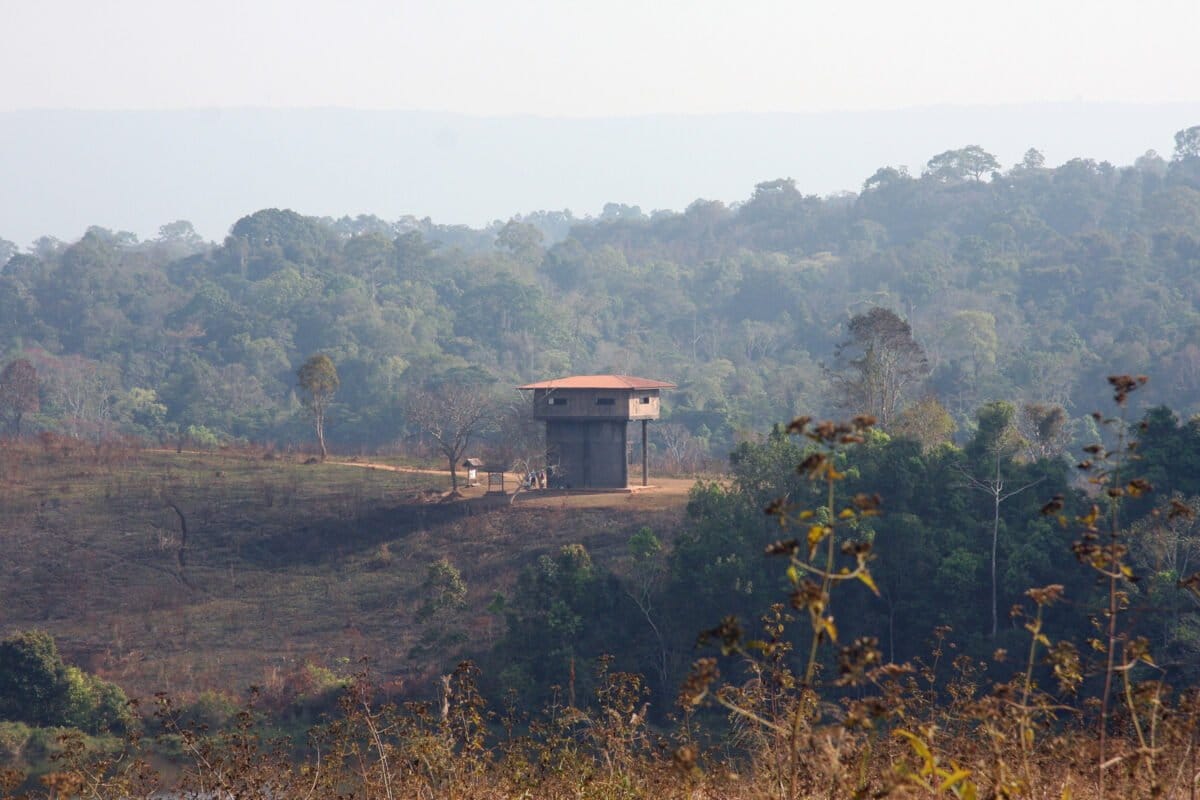
That history also requires caution. Some tropical field stations grew out of colonial patterns of research, where knowledge was extracted from biodiverse countries and careers were built elsewhere. Megan Raby’s history of tropical field stations is a useful reminder that scientific institutions carry histories as well as data. Strengthening field stations should not mean preserving old hierarchies with newer equipment. It should mean funding institutions that build local scientific leadership, support fair employment, share data responsibly, and treat traditional and local ecological knowledge as part of the evidence base.
This is where the decline in fieldwork becomes relevant. A recent Trends in Ecology & Evolution paper warns of an “extinction of experience” among ecologists themselves. The causes are varied: funding constraints, safety concerns, urban university settings, remote technologies, and academic incentives that favor faster outputs. Some of these pressures reflect necessary changes. Fieldwork can be expensive, risky, exclusionary, and environmentally costly if designed poorly. Researchers also need modeling, synthesis, laboratory analysis, and remote sensing. Conservation does not benefit from nostalgia for a narrower version of field science.
Keeping fieldwork useful
The useful question is how to make fieldwork safer, more inclusive, and more closely tied to decisions. Field stations can help because they reduce the friction of field research. A well-run station provides trained staff, safety systems, permits, equipment, protocols, and continuity. It can help visiting scientists avoid the worst forms of parachute research. It can give students their first serious exposure to natural history. It can host technologies that require maintenance, from camera traps and acoustic recorders to carbon-flux towers and molecular labs. It can keep field observation in ecological science without treating fieldwork as a test of endurance.
The need for continuity is becoming more obvious as conservation moves toward stronger claims about impact. Governments, funders, and companies increasingly ask whether an intervention improved biodiversity, protected habitat, or increased resilience. Those claims require more than a map of remaining forest. They need measurements taken before, during, and after an intervention; comparison sites; and people who understand what the measurements mean. Remote systems can collect much of the data. Stations can make the data more credible.
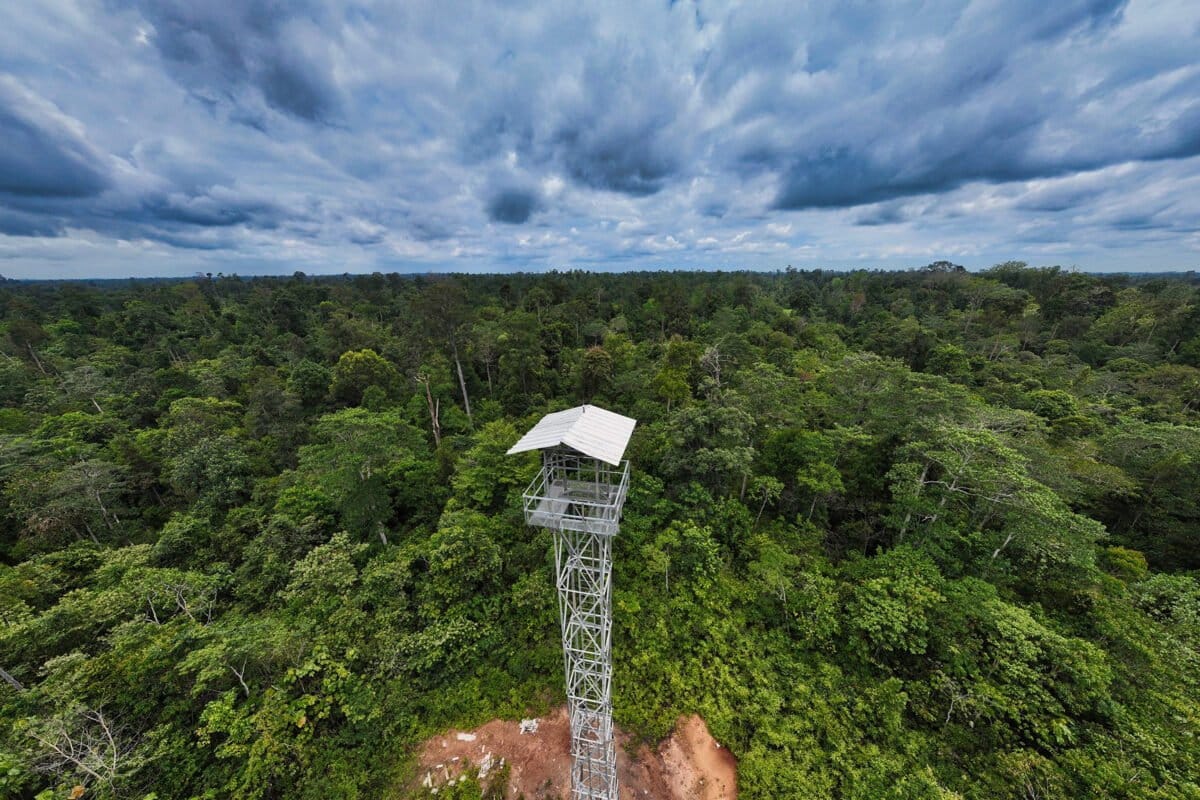
The same point applies to acoustic monitoring. A recorder can capture animal activity long after field staff have left a site. The raw archive may later be analyzed with methods that do not yet exist. Microphones still fail, storms distort signals, rats and ants chew cables, roads add noise, and algorithms make mistakes. Local teams are needed because ecological data are produced in real places, under real constraints. The future of conservation measurement will be more automated. It will also need institutions that can maintain equipment, validate results, and connect findings to management.
Field stations remain financially fragile. Many depend on visiting researchers, field courses, university subsidies, short grants, and the persistence of directors. Political instability, pandemics, inflation, safety concerns, and changes in university budgets can quickly weaken them. The recent debate in the United States over plans to consolidate or close Forest Service research facilities shows that even long-established research infrastructure can become vulnerable when public institutions change priorities. In tropical countries, where many stations operate with smaller reserves and higher logistical costs, the risk is often greater.
What stations need
A serious field-station agenda would start with stable core funding. Short project grants can pay for experiments, surveys, and equipment. They rarely cover the administrative staff, maintenance, community engagement, data management, and safety systems that allow a station to function year after year. Endowments, multi-year operating grants, and national research commitments would do more to protect the infrastructure that conservation depends on.
It would also invest in networks. A BioScience inventory identified 1,268 biological field stations across 120 countries, spanning terrestrial, freshwater, and marine systems. Many stations still operate with limited coordination, even when they face similar questions about climate change, restoration, hunting, invasive species, fire, and land-use pressure. Linking stations across regions would make it easier to compare methods, share protocols, train staff, store data, and respond to emerging threats. It would also make stations more visible to policymakers who now tend to see them as isolated research sites rather than as part of a distributed conservation system.
The final case for field stations is operational. Conservation targets are easier to announce than to deliver. Delivery depends on institutions that can stay with a place long enough to see whether protection, restoration, enforcement, and community engagement are working. Field stations do not solve that problem by themselves. They offer one of the clearest existing platforms for doing the work: collecting evidence, training people, supporting local livelihoods, and changing course when the evidence calls for it.
The next phase of conservation will rely heavily on satellites, sensors, models, and global databases. Those tools are necessary. They will be stronger when tied to people and institutions rooted in the places being measured. Field stations give conservation a way to remain empirical, local, and accountable. That is a practical role, and an increasingly important one.
Citations in the online version.
Great observations on the importance of field stations to conservation. Thanks for all the links which are very useful. I just signed up for the ScienceAdvisor newsletter thanks to your Substack. Anything with Katharine Hayhoe's comments in it is worth following.
I like this because it pushes back against the idea that technology can replace being present in a landscape. Data can tell us that something changed, but field stations help explain why it changed. Do you think conservation funders undervalue long-term field presence because it looks less flashy than new technology?